Unesc's PPGD discusses personal data protection and responsibility for information use

Open class with Professor Têmis Limberger addressed privacy, human dignity, and legal challenges of the networked society

Marciano Bortolin

Published by: Marciano Bortolin

on November 5, 2026

Reading time: 2 minutes.

 Unesc's PPGD discusses personal data protection and responsibility for information use

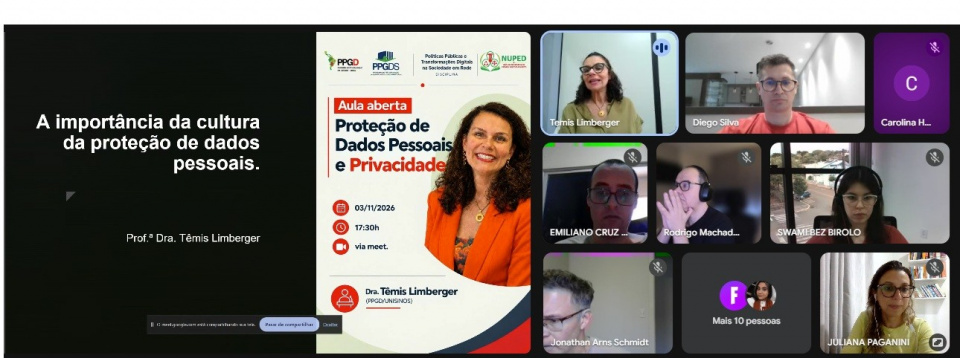
The Graduate Program in Law (PPGD) at Unesc held an open class last Tuesday (11/3) with Professor Têmis Limberger from the Graduate Program in Law at the University of Vale do Rio dos Sinos (Unisinos). The theme was "The Importance of the Culture of Personal Data Protection," and the event was organized in partnership with the Center for Studies in State, Politics, and Law (Nuped), as part of the course Public Policies and Digital Transformations in Networked Society, taught by Professor Juliana Paganini.

The presentation addressed the relationship between data protection, human dignity, and individual autonomy. The professor discussed the value of personal information in consumer society and the inequality between citizens and organizations that collect, store, and use data.

Civil liability for the misuse of information was also part of the presentation. Based on decisions from Brazilian courts, Têmis presented cases involving banking fraud, data breaches, and exposure of health information. These situations allowed for a discussion on the impacts of violations on people's lives and the possibilities for compensation for material and moral damages.

Another aspect discussed was the role of compensations in preventing new occurrences. The discussion highlighted the need to expand the culture of data protection, with the participation of public institutions, companies, professionals, and citizens.

The activity connected legal foundations to everyday situations and broadened the discussion on the challenges of digital transformation. The meeting also contributed to the academic formation of the participants, with reflections on the preservation of fundamental rights in a networked society.

Tags:

Copyright 2026 © UNESC. All rights reserved. Privacy Policy

Join the group